
Set in a sunlit garden bursting with secrets and schemes, The Triumph of Love follows Princess Léonide (Allison Altman), who disguises herself to infiltrate the guarded realm of Hermocrate (Nael Nacer) and his sister Léontine (Marianna Bassham). Her mission? To win the heart of the young Agis (Rob B. Kellogg) and restore him to his rightful throne — all while juggling multiple personas and leaving a trail of romantic chaos in her wake. Hilarity, mistaken identities, and unexpected tenderness ensue in this 18th-century French farce about the lengths we go to for love — and whether love truly triumphs in the end.
Allison Altman as Léonide was a masterclass in comedic timing and emotional depth. She commanded the stage with effortless charm, seamlessly shifting between her different disguises and bringing such humor and warmth to the role. Léonide is the backbone of the story, and Altman delivered a performance that was not only technically sharp but also full of heart. Her ability to make the audience laugh while keeping Léonide’s emotional core intact was truly impressive. Altman radiated joy — and it was contagious.
Vincent Randazzo as Harlequin was simply phenomenal. Their delivery of so many understated yet hilarious lines added layers of humor that kept the audience giggling. They were a comedic anchor without ever feeling over-the-top. Patrick Kerr as Dimas, however, took the humor to another level. His quick-witted, wildly incorrect one-liners were an absolute riot. Every time Kerr walked on stage, you could feel the audience perk up, knowing chaos was about to unfold. In a play already brimming with humor, Randazzo and Kerr elevated it even further.
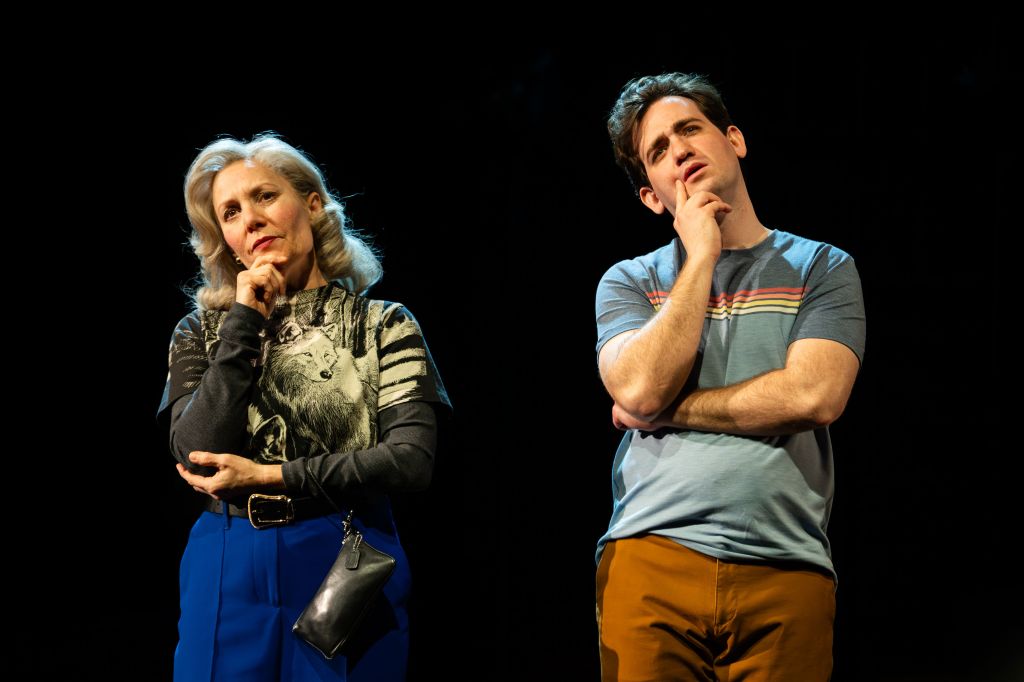
Marianna Bassham (Léontine) and Nael Nacer (Hermocrate) were fantastic as the sibling duo who both find themselves falling for Léonide in her various disguises. Their deadpan deliveries and subtle quirks gave their characters depth while maintaining the comedic tone. They each found clever ways to engage with the audience, bringing a sense of vulnerability to their roles while never losing sight of the humor. Their unraveling was both funny and surprisingly touching.
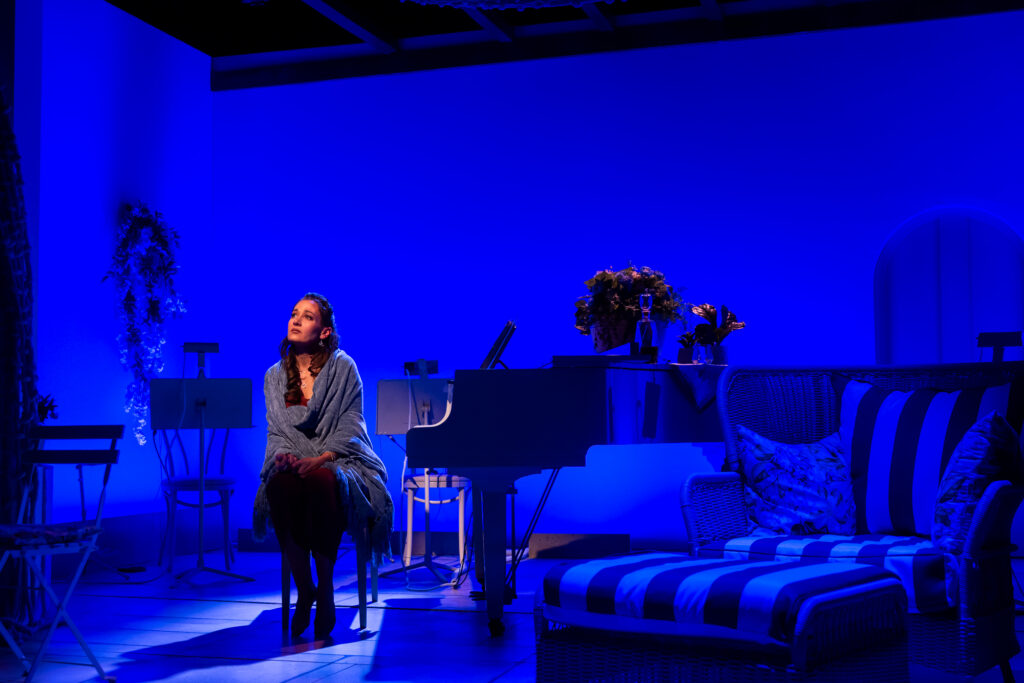
Junghyun Georgia Lee’s set design was breathtaking. When the curtain rose to reveal the garden, I genuinely gasped — it was that beautiful. The vibrant colors and rich textures created an inviting yet slightly whimsical atmosphere, perfectly setting the tone for the farcical chaos to follow. Christopher Akerlind’s lighting design was equally impressive — the subtle shifts in color to reflect different times of day added to the visual richness. However, the sound design by Fan Zhang left something to be desired. It was virtually absent for most of the show, only becoming noticeable in the last 20 minutes — and by then, it felt like an afterthought.
Avanthika Srinivasan as Corine didn’t land for me. Her performance felt flat and out of step with the rest of the cast, almost as if she were a first-year acting student in a room full of seasoned pros. It was distracting and pulled me out of the story. Also, the decision to drop the curtain in the middle of both acts felt odd and ineffective — it didn’t heighten tension or add any value to the story’s rhythm. And then… that ending. Did love triumph? Honestly, I’m not sure. The lack of consequence from the siblings who were conned left me scratching my head. Why weren’t they even a little upset? It felt rushed and unresolved to me.
While I didn’t laugh out loud as much as others, I was definitely in the minority. The audience was howling from the very first scene — and that kind of shared joy is its own triumph. In a theatrical landscape often dominated by heavy themes and moral imperatives, The Triumph of Love offers a refreshing escape. In a time when so much theatre feels like homework — demanding that you unpack metaphors, examine your moral compass, and leave with some grand epiphany — this show is a breath of fresh air. It’s light, it’s funny, and hopes that you walk away with nothing but a lighter heart. In a world that feels so heavy, a couple of hours of pure comedic escapism is exactly what we need — and this show delivers that with style.

 Booked & Scene
Leave a comment