
Mfoniso Udofia’s Her Portmanteau is a deeply moving installment in the Ufot Family Cycle, currently playing at Central Square Theater co-produced with Front Porch Arts Collective. This fourth chapter in Udofia’s series brings us into an emotionally charged reunion between three women—Abasiama Ufot and her two daughters, Adiaha and Iniabasi—who are navigating the chasm created by time, distance, and unspoken truths.
The play opens with Iniabasi’s arrival in the United States from Nigeria, expecting a new life with her mother, only to discover that her homecoming is far from what she envisioned. Instead of moving in with Abasiama, she is met by her half-sister, Adiaha, in an unfamiliar apartment, where long-buried emotions rise to the surface. What follows is an evening of unraveling—of painful confessions, cultural divides, and the weight of expectations placed upon daughters. As mother and daughters collide, Her Portmanteau masterfully explores identity, belonging, and the ways in which love can sometimes feel like an impossible puzzle.
Lorraine Victoria Kanyike was nothing short of incredible as Adiaha Ufot. Her performance was so compelling that she doesn’t need me—or any critic—to tell her how phenomenal she was, though I know we all will. The audience’s visceral reactions proved how deeply Mfoniso Udofia’s words resonated, especially for those who understand the burdens of being the eldest daughter.
As an eldest daughter myself, I saw my own struggles mirrored in Adiaha—the pressure to hold everything together, to spin countless plates in the air, and to be the family’s emotional anchor. Kanyike perfectly balanced Adiaha’s quiet endurance with the moments where she finally speaks her truth, allowing the audience to feel every ounce of frustration, exhaustion, and fierce love she carries.
Her comedic timing, especially through her use of props, added levity to the heavier themes. The constant fluffing and fixing of pillows, the water and tea interactions with Jade A. Guerra’s Iniabasi—all were subtle yet deeply telling choices that enriched her character. Watching her navigate Adiaha’s journey felt like seeing long-missing puzzle pieces click into place, revealing a fuller portrait of her role in the Ufot family.
Having now seen four different portrayals of Abasiama Ufot, I must say that Patrice Jean-Baptiste was absolutely electric in this role. While I hold a special place for the privilege of seeing Mfoniso Udofia herself play Abasiama, Patrice brought a raw intensity that made this chapter of Abasiama’s story especially poignant.
What a joy to witness the evolution of this character as she continues to face some of the most difficult challenges in her journey. Jean-Baptiste was magnetic on stage, especially in the way she shifted between her relationships with Adiaha and Iniabasi. The way she mothered them differently—shaped by their histories and distances—was utterly captivating. Her solo moments on stage were some of the most powerful of the night, a testament to how deeply she has embodied Abasiama.
Jade A. Guerra had the incredible challenge of playing Iniabasi, a character whose pain manifests as anger and bitterness. It’s never easy to play the role of the antagonist, but Guerra excelled—delivering a performance that made Iniabasi’s deep abandonment wounds impossible to ignore.
Iniabasi’s introduction at the airport payphone was one of the most gripping scenes of the play, immediately immersing us in her panic, frustration, and heartbreak. While I personally found it harder to relate to Iniabasi’s experience, I deeply appreciated how Guerra portrayed her arc. By the end of the show, the hardened shell of Iniabasi begins to crack, revealing the hurt child beneath, and that transformation was beautifully done.
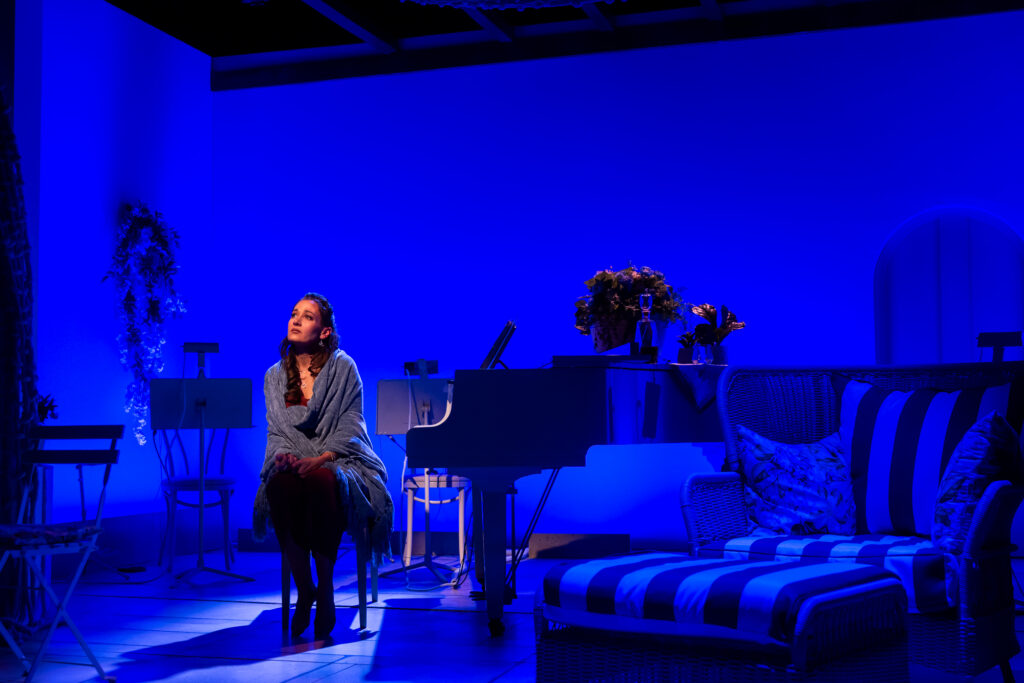
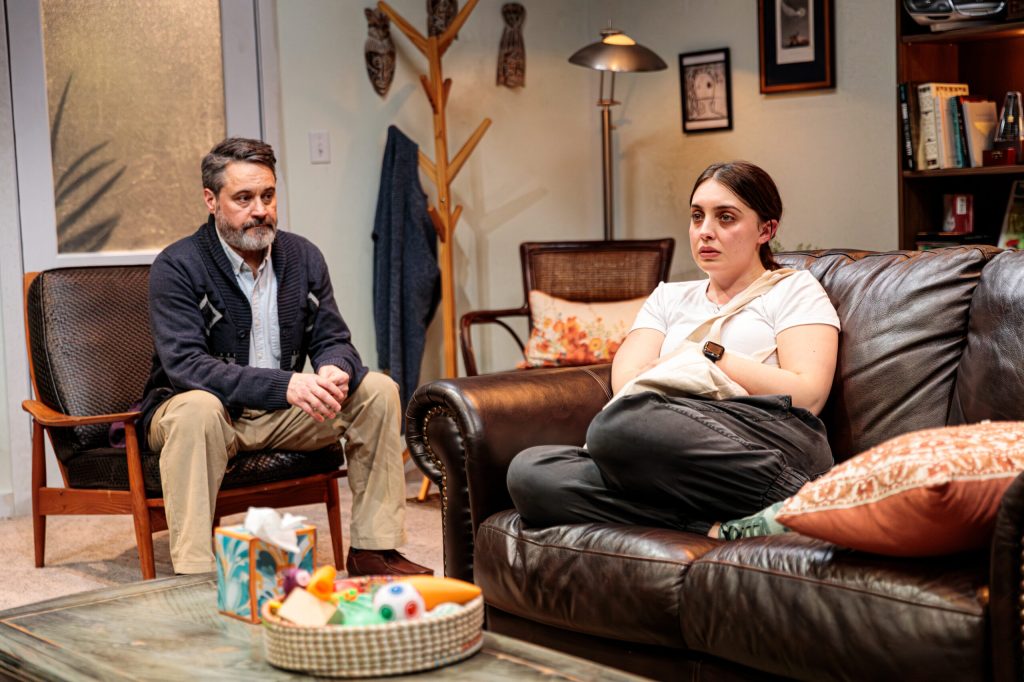
Scenic & Properties Design: Shelley Barish’s scenic design was breathtaking—I adored the layout of Adiaha’s apartment, which felt like a lived-in space, perfectly tailored to her character. Julia Wonkka’s properties design added an extra layer of realism, making moments like pouring real tea, serving food from an actual pot, and handling everyday objects feel even more immersive.
Language Barrier: One aspect that I’ve touched on in numerous Ufot reviews is the extended dialogues in Nigerian. While I understand the necessity of these moments for authenticity, there were times when the conversations lasted long enough that I felt disconnected from the scene. If there were a way to integrate subtitles or shorten these moments slightly, it would help ensure that every audience member can fully absorb the emotional weight of the play.
Mfoniso Udofia continues to prove that she is a masterful storyteller, seamlessly weaving humor into narratives with deeply heavy themes. Her Portmanteau is a testament to her brilliance, and as an eldest daughter, this one hit especially close to home. There were so many moments throughout the show that had me clutching my chest, gasping, and feeling utterly seen.
Beyond the deeply personal connection I felt, this production is a triumph in its ability to immerse the audience in the complexities of familial love, cultural identity, and the grief of what is lost in translation—both linguistically and emotionally. The way Udofia crafts these characters with such care and nuance is truly remarkable, and the performances bring them to life in a way that is both painful and beautiful to witness.
This is not just a play to watch; it’s one to experience, to sit with, and to reflect on long after the final bow. I implore everyone to see Her Portmanteau before this run ends—I already know I’ll be going again, and I can’t wait to uncover even more layers on a second viewing.

 Booked & Scene
Leave a comment