
Sullivan Rep’s latest production, Can-Can, directed, choreographed, and costumed by Dan Sullivan, bubbles over with Cole Porter’s witty music and lyrics. The story centers on Pistache, the bold Montmartre café owner whose establishment is threatened by Aristide, a judge determined to shut down her scandalous can-can. But as the sparks of opposition fly, so too does attraction, with a cast of lovers and artists into the mix.
True to Sullivan Rep’s mission: “putting the community in professional theater”, the production highlighted performers whose lives and careers extend beyond the stage but who bring a genuine passion for performing. That blend of community and craft gave the show an authenticity and energy that was made clear by the joy on each and every performer’s face.
Curtain Up in Montmartre
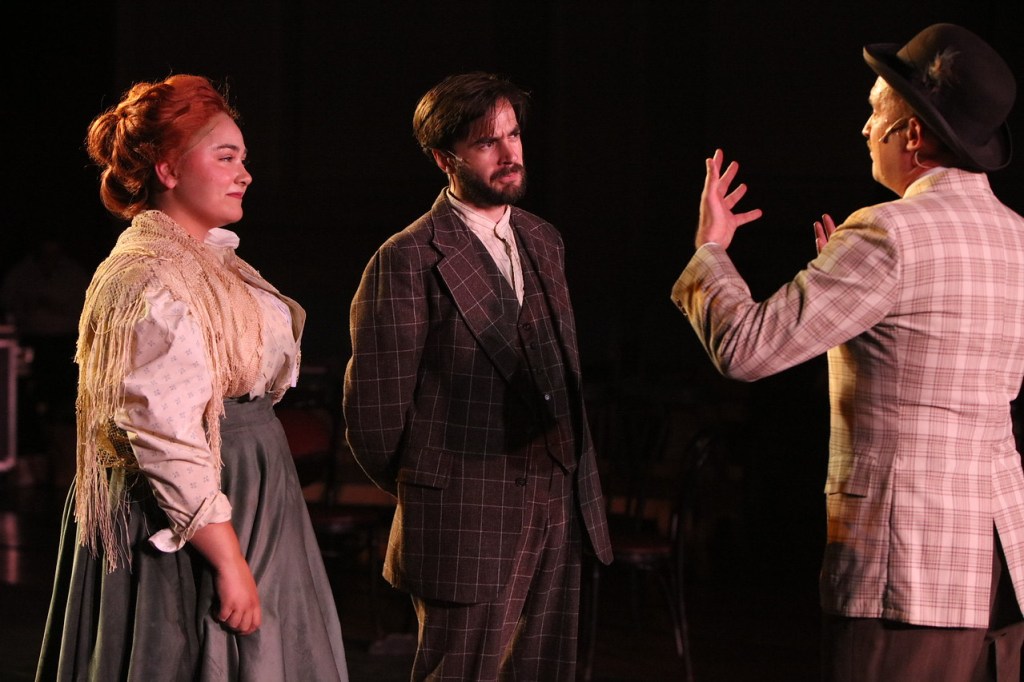
Carly Evans made Pistache the heartbeat of the show, effortlessly fusing charm and humor with powerhouse vocals that soared in every number. Her sharp retorts to Anthony Rinaldi’s Aristide were laugh-out-loud funny, and she carried the role with a charisma that made it impossible to look away.
Bridget Sullivan’s Claudine offered a softer touch, demure on the surface but with a surprising bite in her lines. She handled her romantic entanglements with Boris and Hilaire with grace and humor, providing a quieter but equally effective counterpoint to Evans’ bold Pistache.
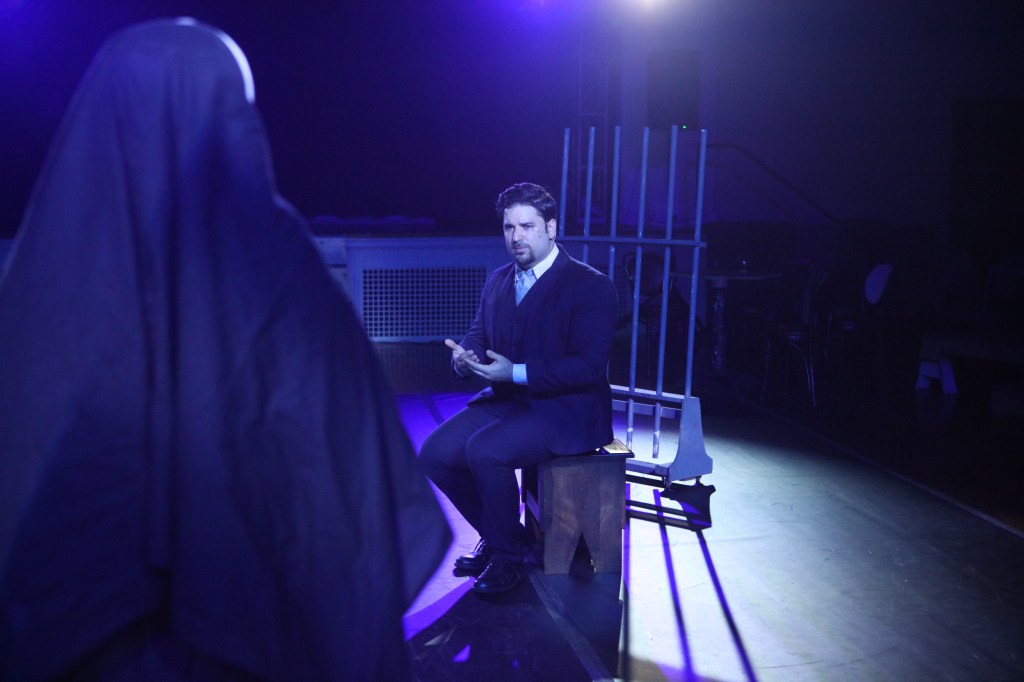
As Boris, A.J. Lyman gave one of the most layered performances of the evening. He leaned into the character’s manipulative, almost villainous side, but his charm and stage presence made it easy to see why some might fall for him. Kevin Hanley’s Hilaire was another standout, delivering an endearing turn and shining particularly in his duel with Lyman, a scene that mixed comedy and tension to perfection. His chemistry with the artists and ensemble added extra spark to every scene.
A Cast That Can-Can
The trio of Andy Ross (Theophile), Ryan Pereira (Hercule), and Dom Pappagallo (Etienne) injected each of their scenes with personality and humor, and their rendition of “Never, Never Be an Artist” was one of the most memorable numbers for me. Hannah Shihdanian, as the model, made a small role pop with coyness and wit, giving her interactions with the artists extra zest.
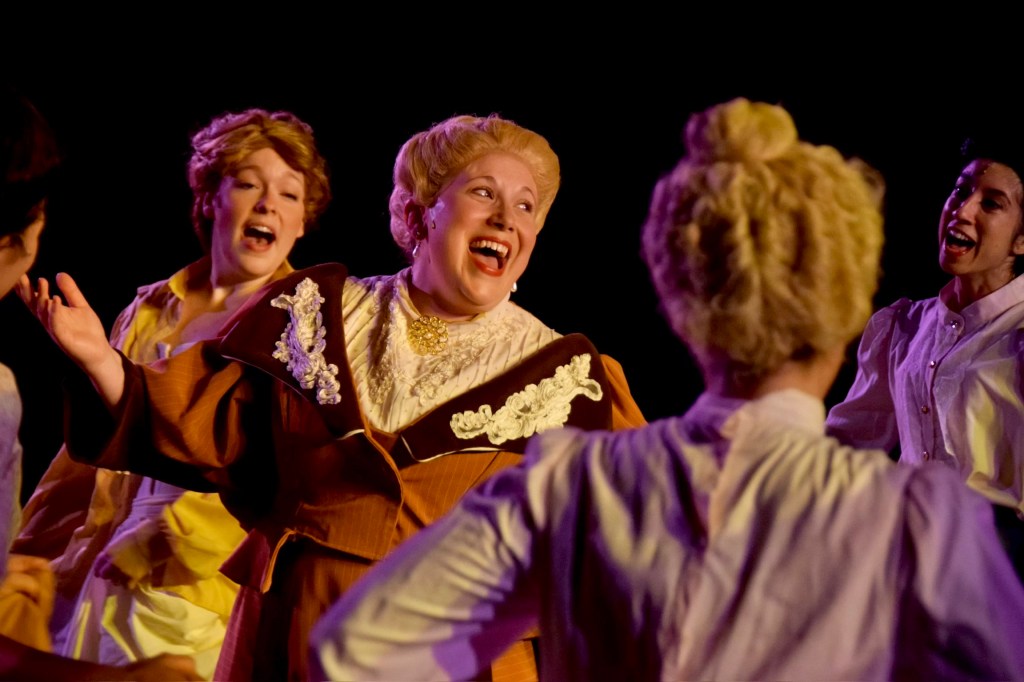
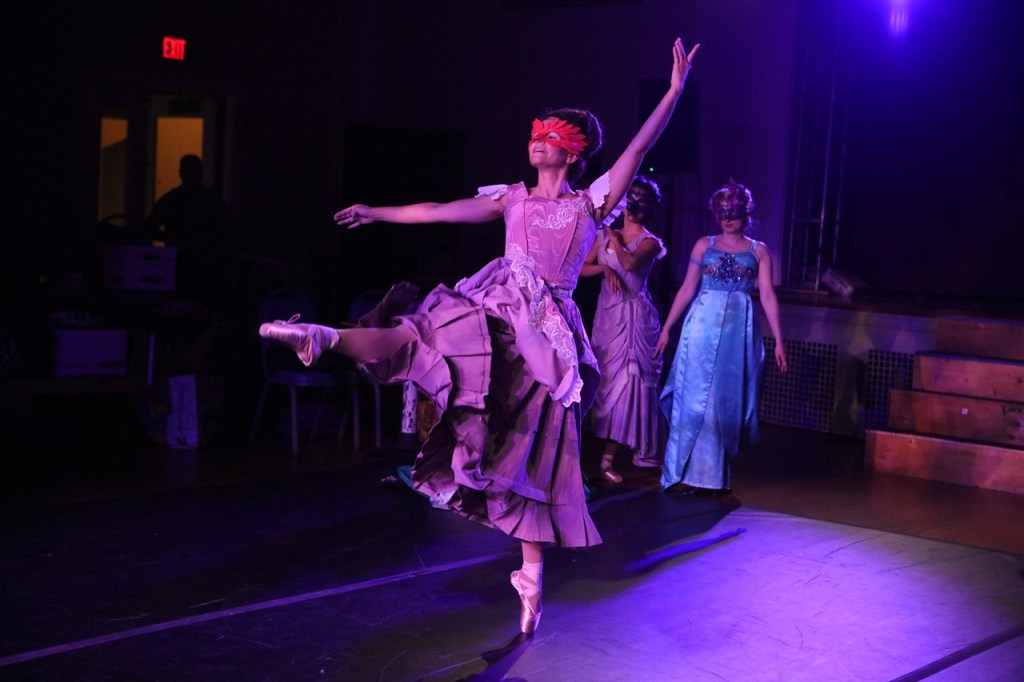
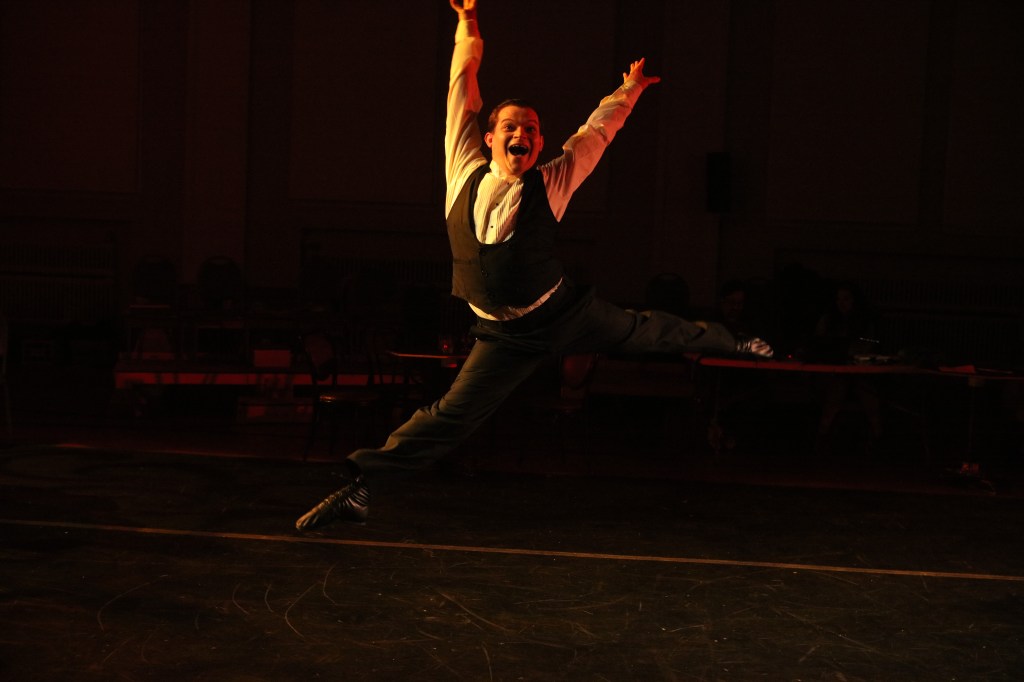
Caroline Granahan as Gabrielle was electric in the Apache Dance, both elegant and commanding in a number that required power and precision. The female ensemble deserves its own ovation: the choreography demanded stamina and exactness, and they delivered with syncopated high kicks, daring jump splits, and incredible unison. Their collective energy is one of the production’s greatest strengths.
Staging the Spectacle
Dan Sullivan’s vision unified direction, choreography, and costume design in ways that made this production feel polished and intentional. Staging the show with the performance space running down the center, flanked by audiences on both sides, could have been risky. Yet the blocking and movement felt natural, with performers carefully angled to ensure visibility and connection no matter where you sat. The choreography was dazzling, from tight kick lines to daring leaps and lifts (including a gasp-worthy midair catch in the Apache Dance). Each dance felt fresh and dynamic, a true showpiece for the performers. His costumes evoked the period beautifully, while Bridget Sullivan’s hair and makeup design (especially the wigs) added authenticity to the period. The orchestra, directed by Hollis W. Sullivan, tied it all together giving Porter’s score the sparkle it deserves.

Not Quite Magnifique
No production is without its bumps, especially early in a run. The most noticeable were sound issues, with microphones inconsistent from actor to actor with some blasting and others fading into the background. Similarly, scene transitions dragged, adding length to an already nearly three-hour show. A quicker turnover of set pieces would help keep momentum strong. And I fully expect these will likely to smooth out with time.
The accents, however, were more distracting. French was the aim, but consistency was elusive… Some actors slipped in and out, others landed far from the intended bullseye. In this case, leaning into the story’s setting without accents might have been the stronger choice.
Finally, there’s the book itself. Can-Can has its charms, but the romance between Pistache and Aristide strains believability. Aristide’s leap from moral outrage to instant infatuation feels rushed, even by musical theater standards. Though Evans and Rinaldi were both engaging individually, the chemistry between them didn’t quite spark, making their love story harder to buy into. It’s less a flaw of the performers than of the 1953 script, but it did undermine some of the show’s heart.
Encore, Encore
For my first Sullivan Rep show, Can-Can delivered exactly what I hoped: an afternoon brimming with energy, heart, and artistry. From the ensemble’s precise and athletic dancing, to the costumes and wigs that looked straight out of the period, to the orchestra that gave Porter’s music a sparkling pulse, the production left a strong impression.
What makes Sullivan Rep so unique is the balance of professional-level ambition and community spirit. The Sullivan family and their collaborators bring together performers who love theater, regardless of their careers outside it, and channel that passion into productions that are well done and joyful.
By the end, the audience was on its feet, swept up in the thrill of it all. It’s clear that Sullivan Rep is carving out a place for themselves as a company to watch and if you find yourself wishing that you were an English dapper Dan who can can-can and humming “C’est Magnifique” on the way home, you’ll know exactly why. Can-Can runs through October 11, 2025.
 Booked & Scene
Leave a comment