
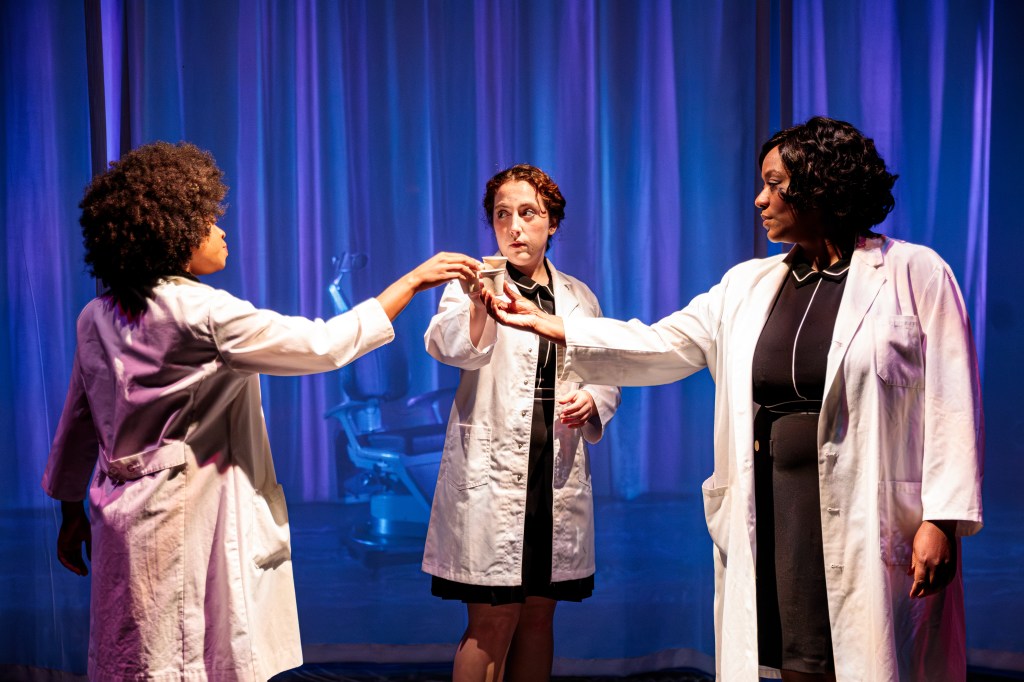
In Actors’ Shakespeare Projects’s reimagined Macbeth, director Christopher V. Edwards trades witches and prophecies for experiments and manipulation. Set during the Cold War, this version, nicknamed MK-Beth, turns Shakespeare’s tragedy into a chilling psychological study. The Weird Sisters are no longer mystical figures but scientists orchestrating state-sponsored mind control. Macbeth and Lady Macbeth become test subjects caught between free will and programming, their ambition twisted by unseen forces. It’s a fascinating premise, one that reframes the classic story through paranoia, power, and the fragility of the human mind.
Something Wickedly Good
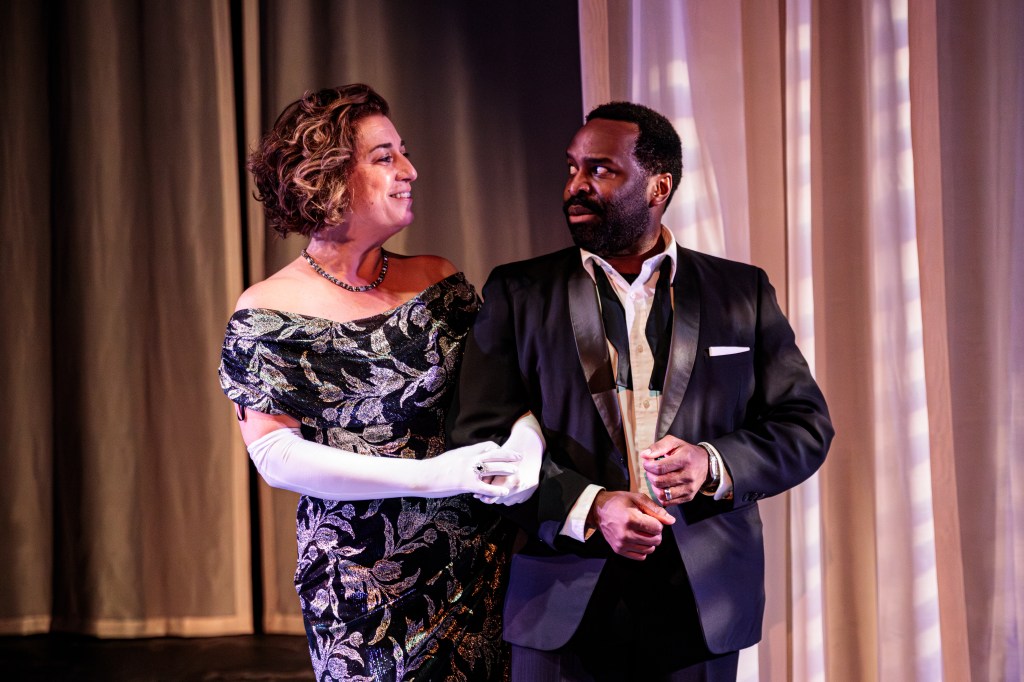
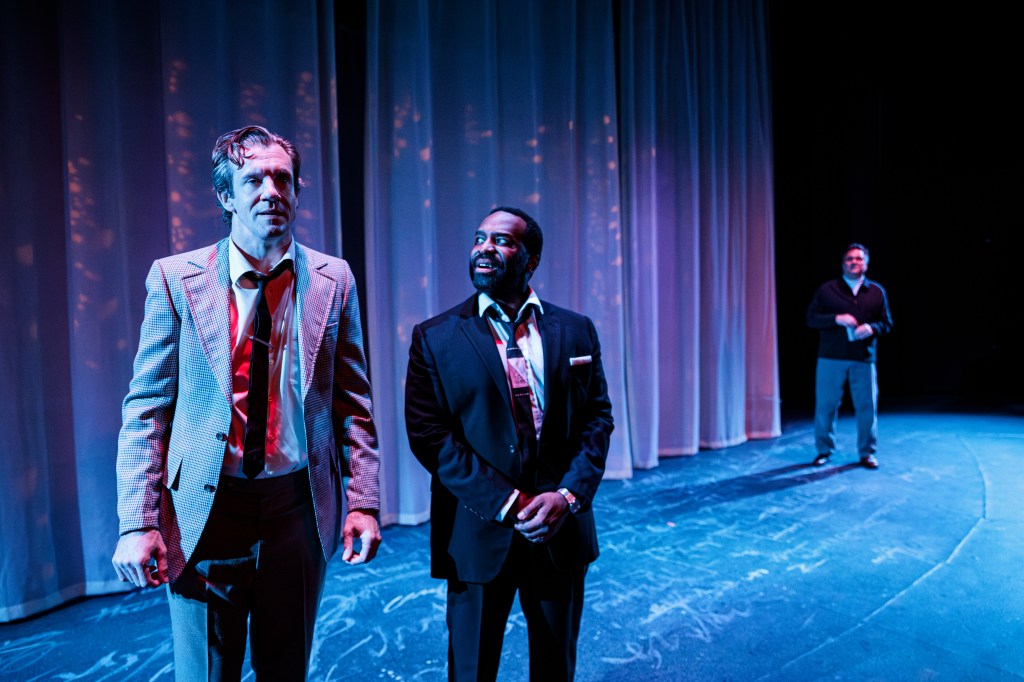
Omar Robinson as Macbeth is magnetic. From his first appearance, he commands the stage with intensity that builds into full-blown unraveling. Watching his descent into madness was thrilling, he shifted seamlessly between guilt, rage, and confusion, keeping the audience captivated every step of the way. The scene with Brooke Hardman’s Lady Macbeth after King Duncan’s murder was especially gripping, both actors locked in a mix of fear and exhilaration that pulsed through the room.
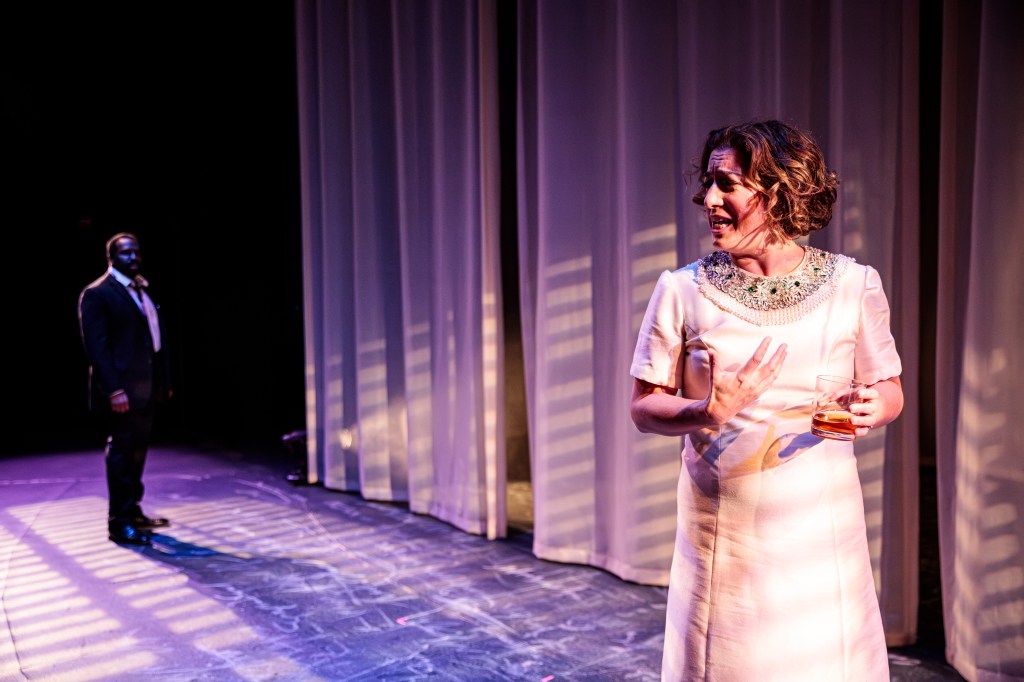
Brooke Hardman delivers an extraordinary Lady Macbeth. The production opens with family footage of the Macbeths and their child, followed by the funeral, which adds a layer of tragedy that informs her every action. This framing choice by Edwards helps us understand her hunger for control and her willingness to chase power as a way to fill an unspoken void. Hardman balances her ambition with deep vulnerability; her moments of stillness are just as potent as her bursts of command. Whether she’s charming Duncan’s guests, plotting murder, or unravelling under the weight of guilt, she grounds the role in recognizable humanity. Her “out, damned spot” scene wasn’t just a breakdown: it was a quiet implosion, heavy with grief, regret, and exhaustion. For me, she was the heart of the production.

Standouts in the Shadows
Among the ensemble, several performances stood out. Claire Mitchell shone as Witch 3 and the 2nd Murderer, embodying the scientist concept with the most conviction. Jesse Hinson brought depth to Banquo and the Doctor, and his ghostly reappearance was a highlight, staged with eerie precision and striking visual effect. Brian Demar Jones as Macduff delivered a powerful performance, especially in the final confrontation with Macbeth, which was executed with emotional weight and sharp physicality.
Designing Paranoia
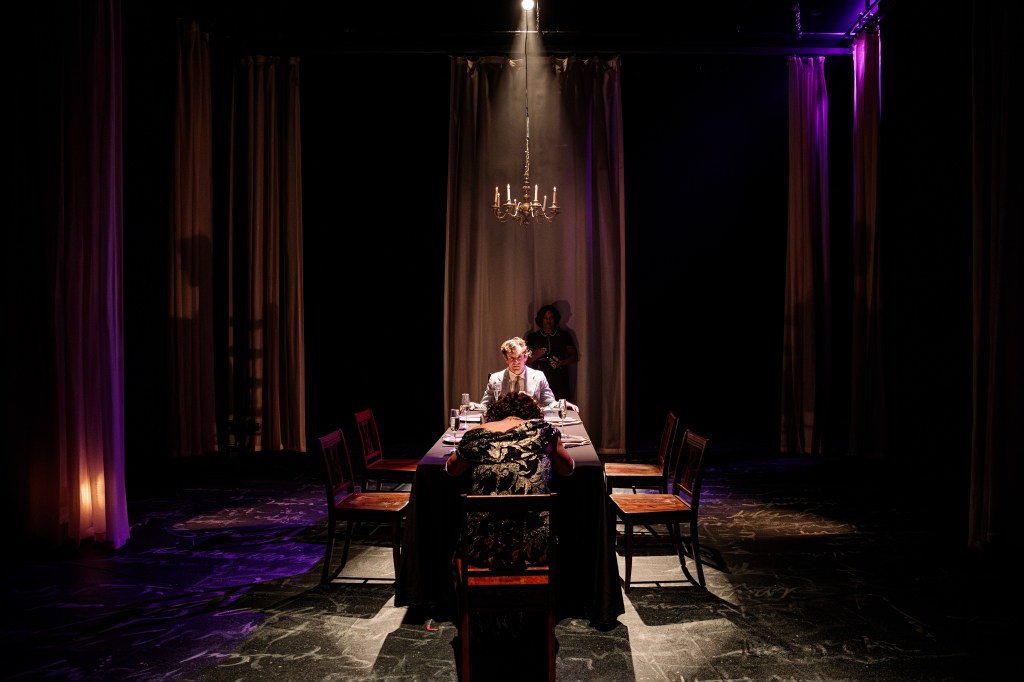
The production design was a major strength. Elmer Martinez’s lighting created a moody, almost claustrophobic atmosphere that fit the 1960s setting perfectly. The interplay of light, shadow, and curtain movement evoked both paranoia and the secrecy of covert experiments. Mackenzie Adamick’s sound design was equally strong, heightening the MK-Ultra tone with unnerving electronic hums and sharp sonic shifts. The projections by Sue Rees mostly worked, particularly when used to disorient and immerse, though one extended shoreline sequence lingered too long and became visually dizzying.

A Glitch in the System
While the concept is rich with potential, it didn’t always land. The idea of turning the witches into scientists is bold, but the execution often wavered between the psychological and the supernatural. Despite the stated intent to remove the mystical elements, the performances and staging sometimes leaned back toward familiar witch-like gestures and tone. As a result, the concept never fully committed to the mind-control angle, leaving the production caught between two worlds. Some of the costuming also disrupted the otherwise cohesive design, most notably, the witches’ identical costumes down to the white socks and shoes for two of the witches but no socks for the third, which unintentionally broke their visual unity. Details like that may seem small, but in a production built around precision and manipulation, this stood out.
The Porter scene, performed by Dennis Trainor Jr., was the biggest miss for me. The monologue’s shift into modern political commentary felt jarring within the 1960s world the play was working so hard to create. It stretched on for too long, losing momentum and breaking the eerie tension that had been building. While the attempt to connect Shakespeare’s humor to today’s issues is understandable, it ultimately clashed with the tone and setting of this production, pulling the audience out of the story instead of deepening it.
In short, the production’s ambition occasionally outpaced its clarity. The ideas were fascinating, but not all of them felt fully realized.
Tomorrow, and Tomorrow, and Tomorrow
Actors’ Shakespeare Project’s Macbeth is an inventive, thought-provoking take on one of Shakespeare’s darkest works. Not every experiment pays off, but the ambition is clear and the performances—particularly from Omar Robinson and Brooke Hardman—make it worth the watch. It’s a production that reaches for something bold: to strip away fate and show what happens when human desire, paranoia, and power collide. Even when uneven, it’s never dull. Macbeth runs through October 26, 2025.
 Booked & Scene
Leave a comment