
Kate Hamill’s Little Women, now onstage at Actors’ Shakespeare Project under the direction of Shana Gozansky, keeps the bones of Alcott’s story: four sisters growing up during the Civil War while their father is away, figuring out love, ambition, illness, money, and what kind of women they want to be. This version places Jo at the center as the narrator of her own coming-of-age, shaping the March family history in real time and inviting the audience into a world where memory, performance, and girlhood all live onstage together.
The Ones Who’d Make Marmee Proud
Let’s start with the people who were genuinely doing the lord’s work up there.
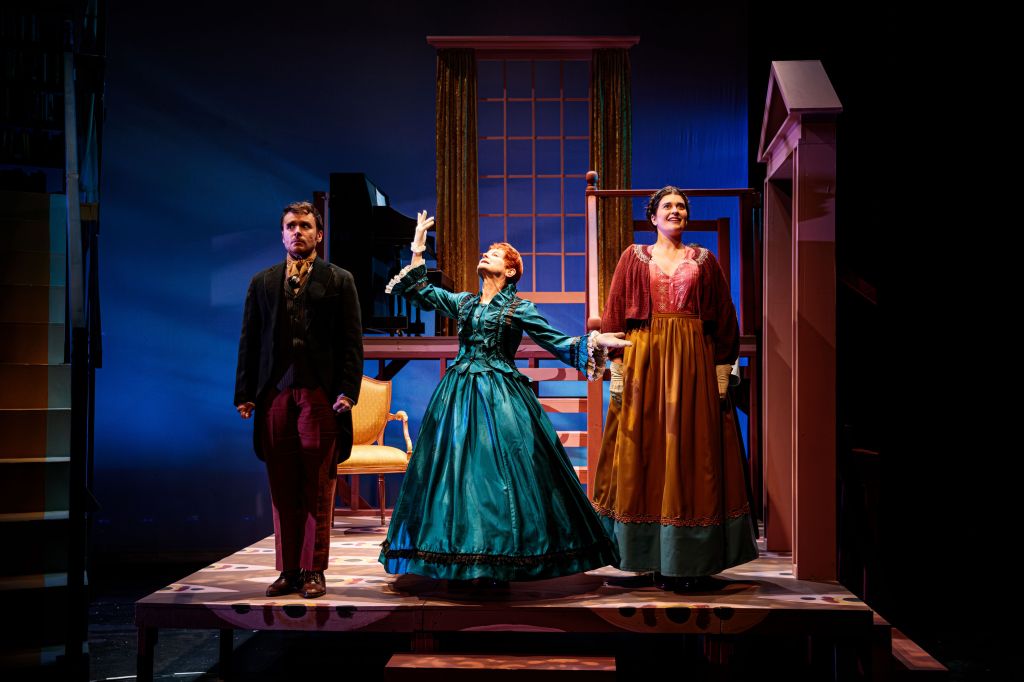
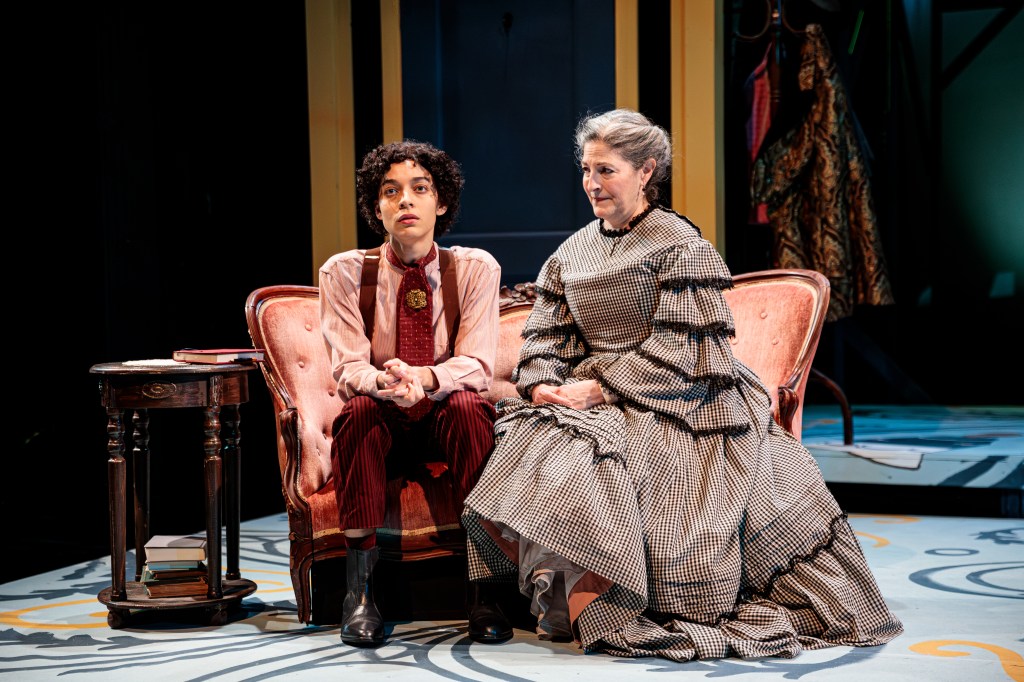
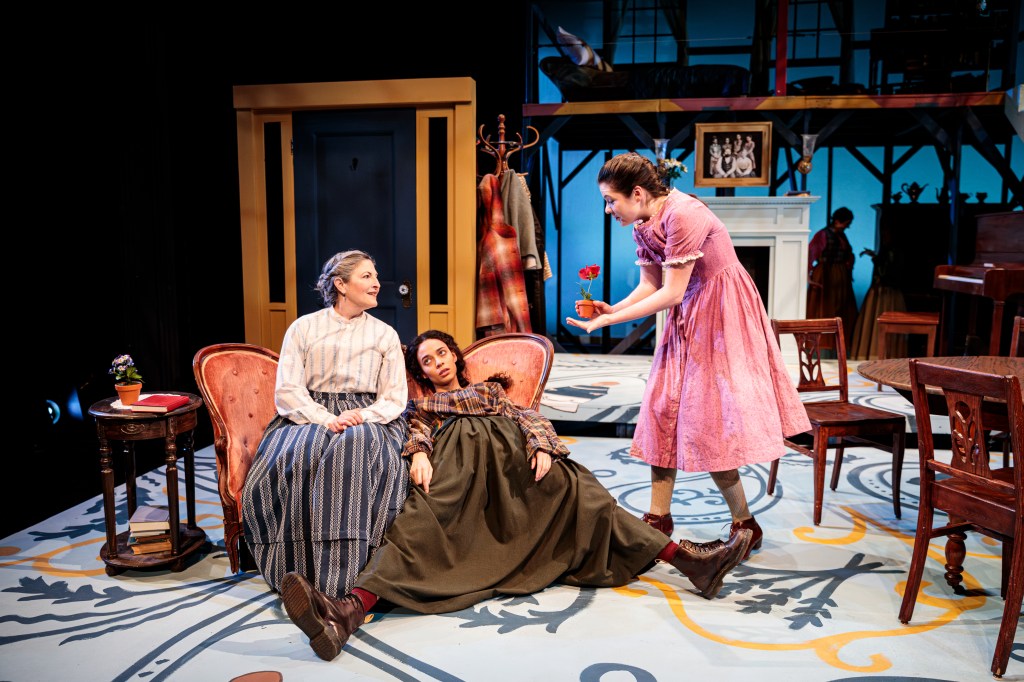
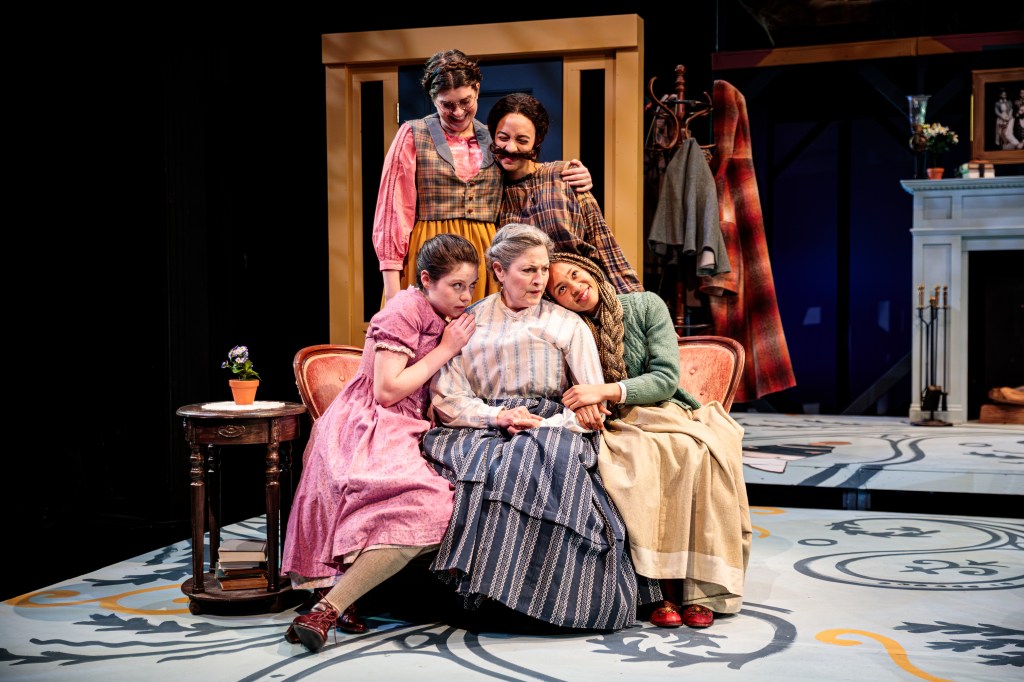
Sarah Newhouse’s Marmee was the grounding force the entire show needed. She had elegance, warmth, and that very specific “I am holding this household together while the world is on fire” energy. What really landed for me was how different each of her relationships with the girls felt. And her Aunt March? A full, sharp, fabulous pivot. Completely distinct and an absolute delight.
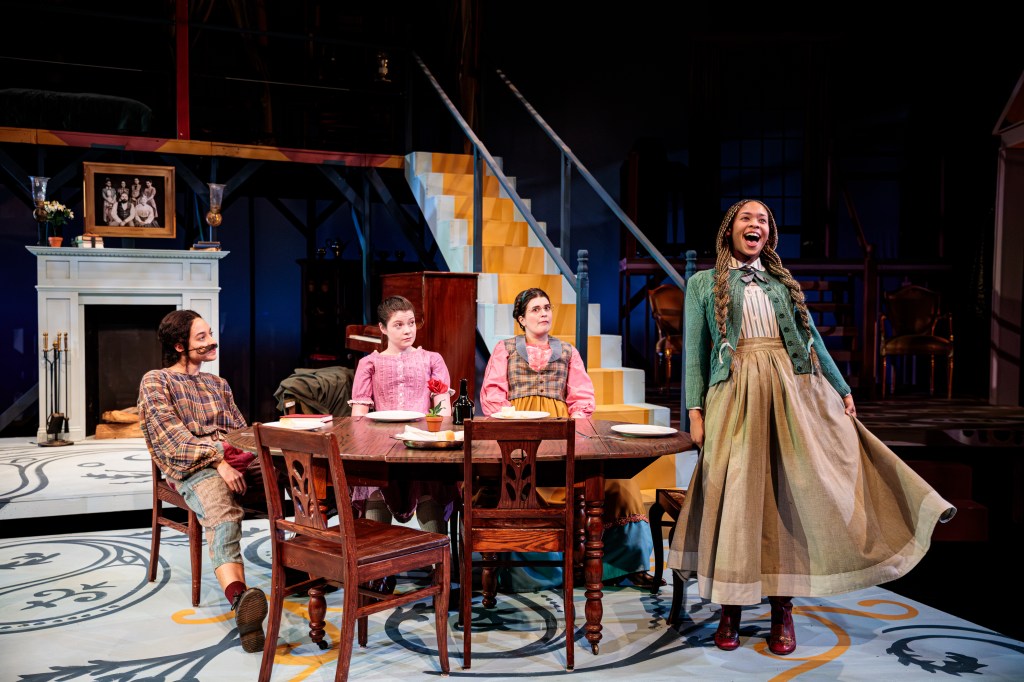
Chloe McFarlane’s Amy was, without question, the standout sister. She nailed that youngest-child mix of ambition, social awareness, and stubborn personal values. Her arc made sense. Her choices were clear. She felt like she was living inside a fully realized story.
Amy Griffin as Hannah/Mrs. Mingott walked onstage and the entire production was lifted. Every single time. The comedy, the confidence, the command: she knew exactly what show she was in and invited us to join her there. A scene-stealer in the best possible way.
Chris Stahl doing triple duty as Mr. Brooks/Parrot/Mr. Dashwood was one of the night’s biggest joys. The physical and vocal differentiation between roles was so clean and so smart. And yes, I still cannot explain why there is a fully talking parrot scene—but I laughed, the audience laughed, and in a production that often felt very heavy, that levity was desperately needed. His Mr. Brooks was also beautifully modulated, especially in how differently he showed up with Laurie versus Meg.
Jo March, Interrupted
Jo is the heartbeat of Little Women. If she doesn’t work, the show doesn’t work. So when I realized I wasn’t connecting with her, I had a bit of an “uh-oh” moment.
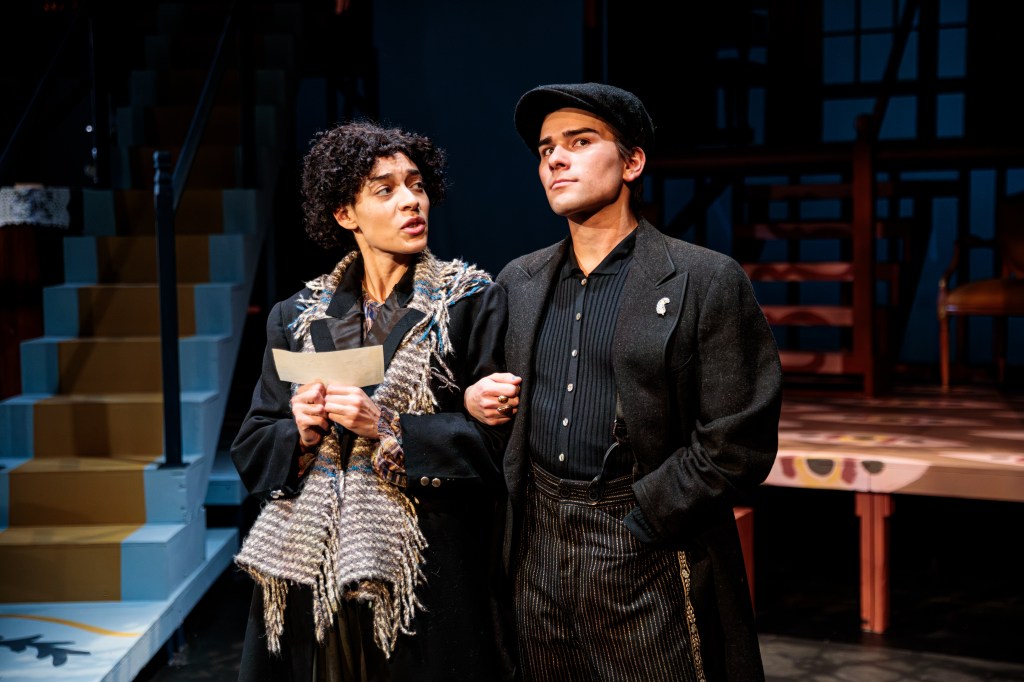
Aislinn Brophy is onstage almost the entire time, and instead of being pulled into Jo’s drive and imagination, I found myself increasingly pushed away from her. The performance, combined with the direction and the design choices, didn’t read as “a young woman pushing against the limits placed on her.” It read as a Jo who seemed actively disconnected from the world of the play and, at times, from the story she was supposed to be telling.
What makes Jo revolutionary is her hunger: for writing, for independence, for a life bigger than the one prescribed to her. Here, that ambition felt muddy. The choices leaned so hard into rejecting traditional femininity that it stopped being about societal constraint and started feeling like we were circling a completely different conversation about gender identity—one the production never actually committed to. And living in that almost-there space made the characterization feel unfocused and, frankly, frustrating. This performance kept getting tantalizingly close to a really compelling interpretation and then stopping just short.
There were multiple moments where I thought, “Okay, this is the turn. This is where we’re going to define who this Jo is.” And it never came. In a play that lives or dies on our investment in Jo, never feeling connected to Jo is an issue.
The Boot-Stomping Heard ’Round Concord
I always try to talk about both the successes and the struggles, and in this case the struggles were hard to ignore.
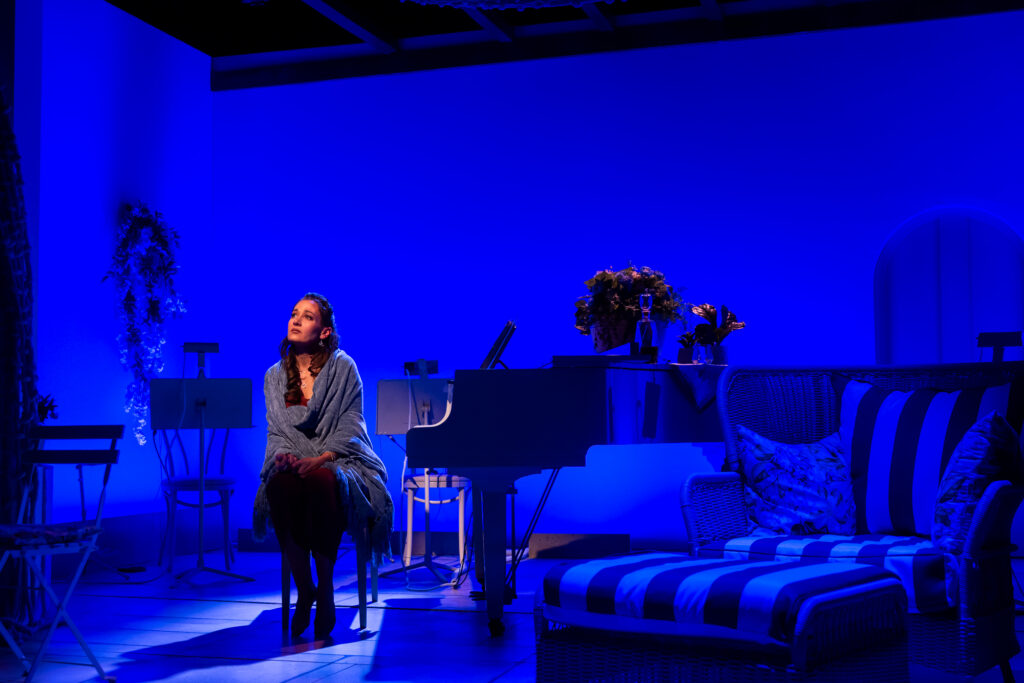
Deb Sullivan’s lighting had some genuinely lovely, effective moments that gave us focus and atmosphere.
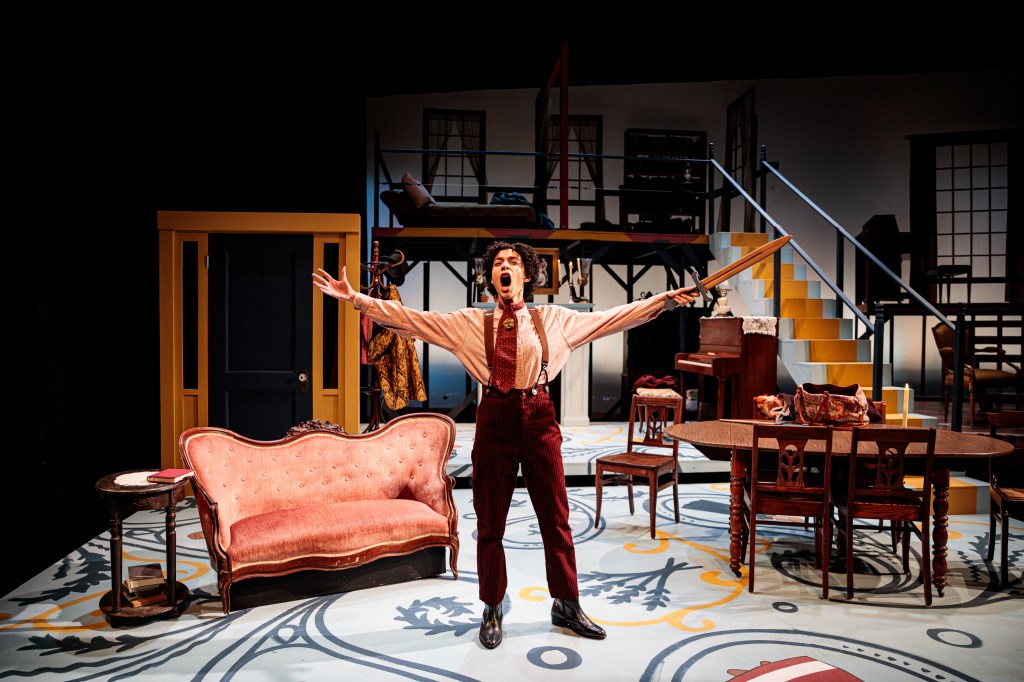
But the combination of Shana Gozansky’s staging choices, Jenna MacFarland Lord’s raised set, Zoe Sundra’s costuming that included combat boots, and an un-mic’d cast created a recurring situation where the loudest thing onstage was not the dialogue: it was the sound of stomping. In a theater we want to be hearing the actors’ lines, not their boots.
The spatial logic of the staging was also confusing. Characters would exit one house and re-enter another from two different ways that didn’t track. The giant paisley floor pulled focus rather than supporting the world. Beth’s post–scarlet fever sequences veered into a kind of frantic abstraction that didn’t feel or seem real at all. And Meg’s Act Two monologue, which should feel like thoughtful commentary on marriage and labor, landed as whiny and pitiful rather than insightful.
Compared to other Hamill’s adaptations, this one felt structurally the weakest. While I am not the biggest fan of her works there are often moments of wit and new perspectives that I felt this production was missing.
Somewhere Amy Is Painting This Better
This is a Little Women that clearly has ideas. I just kept wishing it would follow them all the way through instead of stopping right at the edge.
There are performances here that are absolutely worth seeing: Sarah Newhouse, Chloe McFarlane, Amy Griffin, and Chris Stahl bring humor, specificity, and real craft to the stage and consistently elevate the material around them.
If you’re a Hamill completionist or a diehard Little Women fan, you’ll find moments and performances to enjoy. I just wanted a clearer point of view, a braver follow-through on its most interesting ideas, and a Jo who made me believe in the story she was trying to tell. For me, the real coming-of-age story was the rise of the supporting cast. Little Women runs at Actors’ Shakespeare Project through March 1.
📸: Benjamin Rose Photography
 Booked & Scene
Leave a comment